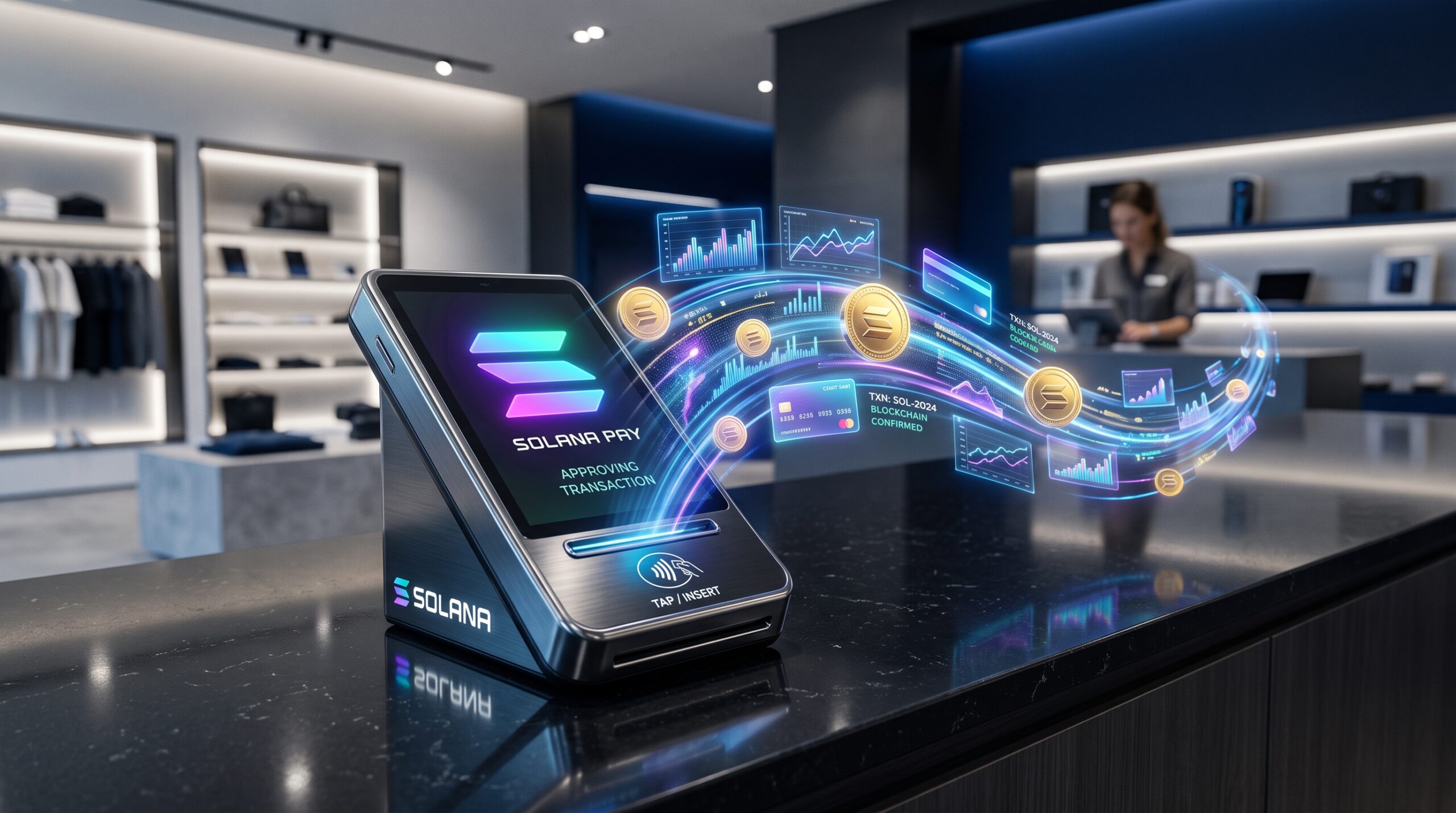
The scaling bottleneck that has plagued the digital asset landscape for nearly a decade has finally reached a breaking point. As global transactional demand spikes, Bitcoin’s base layer remains structurally choked at a mere 7 transactions per second, while Ethereum’s layer-1 gas fees routinely surge to extortionate levels during high-traffic market windows. If you think the current multi-layered blockchain ecosystem is prepared to handle the raw volume of global merchant processing without a complete architectural overhaul, you are only looking at the tip of the iceberg.
For everyday users trying to buy a coffee, execute a remittance transfer, or settle an online invoice, the friction of waiting ten minutes for a confirmation or paying $25 in network fees is completely unacceptable. It completely destroys the foundational promise of a decentralized currency framework. As retail consumers and merchant networks look for immediate, low-cost alternatives, an aggressive contender has stepped directly into the spotlight. Let’s look at the data to see whether Solana has the architectural capacity to claim the throne as the primary global payment rail.
The Speed and Fee Realities Totaling the Legacy Chains
To understand why a 2026 Wall Street price bombshell is suddenly hurtling toward Bitcoin and crypto infrastructure, you have to look directly at the raw operational metrics. While Ethereum has explicitly pivoted its entire development scaling strategy toward complex Layer-2 rollups, this approach has fragmented user liquidity and created disjointed user experiences across various bridges. Solana, by contrast, operates on a monolithic architecture that processes everything on a single, unified state machine.
During recent settlement periods, Solana successfully sustained an average throughput of 1,899 to 4,000 organic transactions per second (TPS), with sub-second block times and a network time-to-finality of under 13 seconds. More importantly, the average transaction cost on Solana hovers securely between $0.0005 and $0.005. For global merchants running high-volume, low-margin businesses, a predictable sub-cent transaction cost changes the entire economic playing field.
Institutional Capital and Web2 Giants Move to Solana
The narrative that Solana is merely a playground for speculative retail assets has been completely dismantled by recent institutional integration data. Corporate giants are no longer treating the high-throughput network like an experimental sandbox; they are building core financial infrastructure directly on top of it.
-
The Stripe & Shopify Integrations: Payment processor Stripe natively routes its global stablecoin checkout features through Solana, allowing merchants in over 70 countries to accept digital dollars that settle in seconds.
-
The Open USD (OUSD) Launch: A massive 140-partner consortium—backed by financial titans including BlackRock, Visa, Stripe, and Mastercard—announced the launch of Open USD, a revenue-sharing stablecoin deploying natively on Solana on day one.
-
Enterprise Banking Adoption: Financial services giant SoFi launched enterprise banking layers on Solana, while legacy payment providers like Visa utilize the chain to settle millions in cross-border transactions between commercial banking desks.
Comparing Global Payment Networks by the Numbers
When evaluating whether a network can handle the weight of global commerce, you must look at real settlement velocity rather than just theoretical marketing claims.
| Performance Metric | Bitcoin (Base Layer) | Ethereum (Layer 1) | Solana Network |
| Sustained Throughput | ~7 Transactions / Sec | ~15 Transactions / Sec | 1,000 – 4,000+ Transactions / Sec |
| Average Settlement Cost | $2.00 – $50.00+ | $5.00 – $80.00+ | Less than $0.01 per transfer |
| On-Chain Stablecoin Volume | Negligible | ~$551 Billion / Month | ~$650 Billion / Month (Record Peak) |
| Finality Window | 10 – 60 Minutes | 2 – 15 Minutes | ~400ms (经济终局 ~12 Sec) |
The data reveals an incredible shift: Solana’s adjusted stablecoin volume recently topped $650 billion in a single month, officially outpacing Ethereum’s on-chain stablecoin settlement velocity.This indicates that while Ethereum still holds a deeper aggregate pool of capital supply, the actual transactional velocity and utility are concentrating heavily on Solana’s execution layer.
The Remaining Engineering Hurdles for Total Dominance
Despite its current momentum, Solana’s path to replacing traditional credit card processing rails like Visa isn’t completely clear of engineering obstacles. The network has achieved significant stabilization milestones, maintaining a clean 100% uptime record over consecutive 90-day stretches following scheduler upgrades, but architectural decentralization remains an ongoing battle.
The successful mainnet deployment of the secondary validator client, Firedancer, has significantly reduced systemic software vulnerabilities by diversifying the codebase. However, because transaction fees are kept so incredibly low to benefit the end consumer, the direct protocol revenue capture remains minimal. The ecosystem must continue balancing its dirt-cheap user pricing model with long-term financial incentives for the validation nodes that keep the infrastructure secure.
Positioning Your Portfolio for the New Payments Paradigm

The global financial system is quietly undergoing a fundamental re-wiring, and holding onto outdated layer-1 networks purely out of historical loyalty is a dangerous investment strategy. The trend lines show that market cap dominance is shifting away from theoretical storage assets and moving rapidly toward functional, high-velocity utility networks.
If you want to protect your digital asset portfolio from structural obsolescence, you need to adjust your custody and exposure habits today. Stop looking at crypto as just a digital gold rush, and start treating it like the future of global telecom and payment routing. Keep your foundational capital anchored, but make sure your active portfolio allocation reflects the massive real-world transaction volumes shifting toward high-throughput ecosystems.
FAQ
Can Solana handle the transaction volume of Visa or Mastercard?
While traditional credit card networks can scale up to handle peak loads of 24,000 to 65,000 transactions per second, Solana’s live performance proves it can comfortably manage thousands of sustained global transactions per second, making it fully capable of processing modern global web commerce.
Why do merchants prefer accepting USDC on Solana over volatile assets like SOL?
Merchants operate on strict real-world margins and cannot afford to accept a payment that drops 10% in value an hour later. Settling in USDC on Solana gives them the immediate, sub-cent transaction speed of the blockchain combined with the absolute price stability of the U.S. dollar.
What happens to Solana payments if a validator node goes offline?
Solana’s consensus protocol automatically routes transactions around inactive validator nodes. With nearly a thousand active global validators running diverse software clients like Firedancer, individual node dropouts have zero impact on the daily speed or security of consumer transactions.