You deposit crypto into a protocol promising attractive yields, then watch the value of your position quietly shrink or disappear after a smart contract issue. Passive income in DeFi can look easy on the surface. The reality involves real risks that catch many people off guard.
Staking and yield farming both offer ways to earn on idle assets, yet they differ significantly in complexity and exposure. Choosing the right approach and applying solid risk controls determines whether you generate steady returns or suffer painful losses. Here’s a clear-eyed look at both strategies and how to pursue them more safely.
Understanding Staking as a Lower-Complexity Option
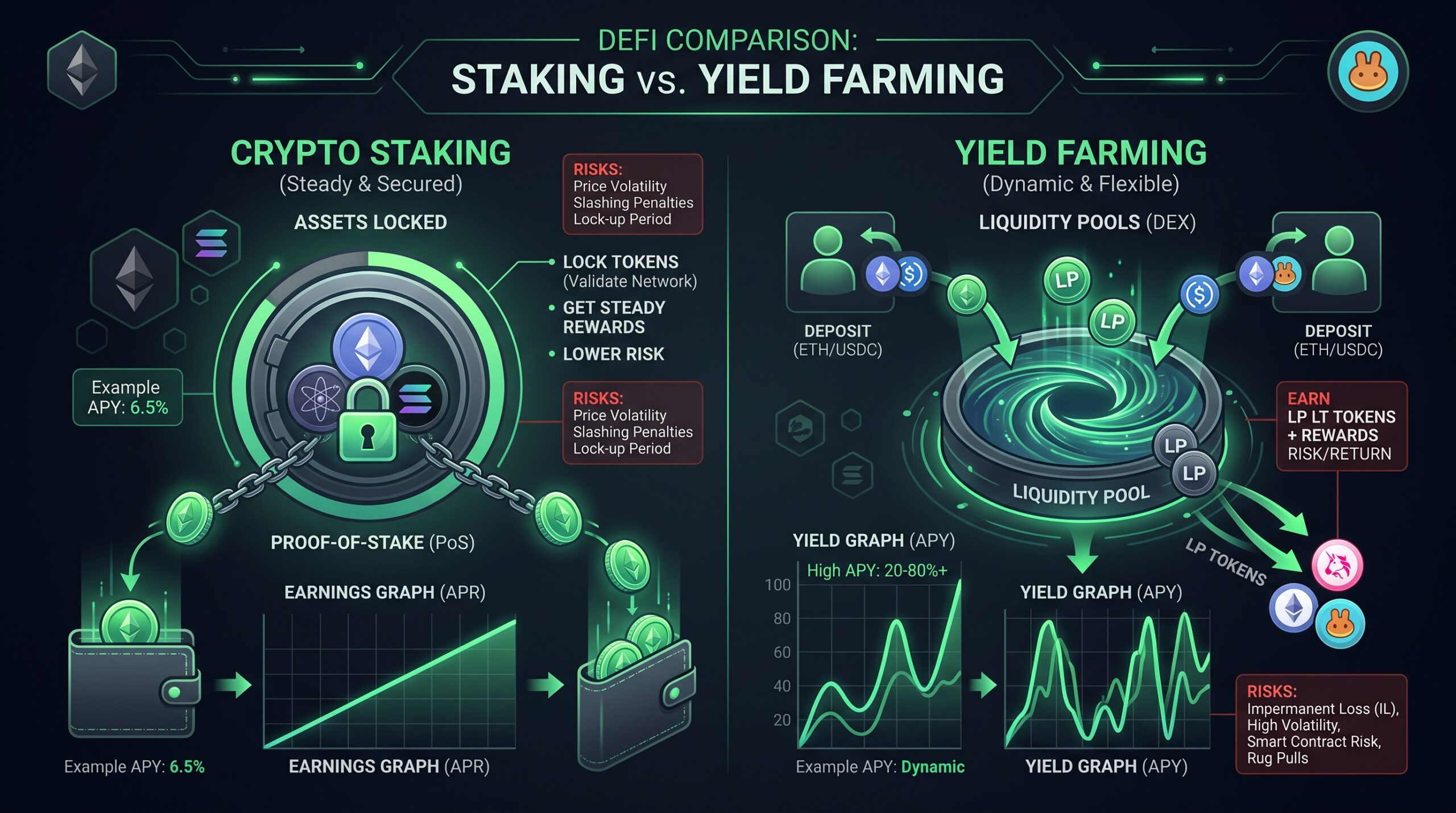
Staking typically involves locking tokens to support network security or protocol operations in exchange for rewards. On proof-of-stake chains, this helps validate transactions. Many platforms also offer liquid staking, which gives you a receipt token that can still be used elsewhere.
Rewards usually come from inflation or protocol fees and tend to be more predictable than farming returns. The main risks include validator performance, lock-up periods, and smart contract vulnerabilities in liquid staking protocols. Slashing penalties can also reduce your principal if the validator misbehaves.
For many people, native staking or established liquid staking options serve as a relatively straightforward entry point into passive DeFi yields. The simpler mechanics make it easier to understand what can go wrong.
How Yield Farming Differs and Where the Extra Yield Comes From
Yield farming generally requires providing liquidity to decentralized exchanges or lending markets. You deposit pairs of assets into a pool and earn trading fees plus any additional incentive tokens the protocol offers.
Higher potential returns often come with higher complexity. Impermanent loss occurs when the price ratio of your deposited assets changes, leaving you with less value than if you had simply held. Incentive tokens can also drop sharply in price, eroding overall profits.
Farming strategies frequently involve multiple steps—providing liquidity, staking LP tokens, and claiming rewards. Each added contract interaction increases exposure to potential bugs or economic exploits.
Key Risks and How to Reduce Them
Smart contract risk sits at the top of the list for both staking and farming. Even audited protocols can contain vulnerabilities. Spreading capital across multiple established platforms rather than concentrating in one place limits damage from any single failure.
Impermanent loss deserves special attention in farming. Choosing pools with highly correlated assets or stablecoin pairs reduces this drag. Regularly monitoring positions and having an exit plan helps when market conditions shift.
Liquidity and lock-up risks also matter. Some staking arrangements restrict withdrawals for days or weeks. Farming positions may become difficult to exit during periods of high volatility or low liquidity. Always check exit conditions before depositing.
Practical Tips for Safer Passive Income

Start with smaller amounts you can afford to learn with. Use protocols that have operated for longer periods, hold significant total value locked, and maintain transparent teams and audits. Prefer those with strong bug bounty programs and clear documentation.
Diversify across different strategies and chains rather than chasing the single highest advertised APY. Extremely high yields often signal elevated risk or temporary incentives that will decline.
Keep detailed records of deposits, rewards, and gas costs. Calculate real returns after fees and token price changes instead of focusing only on headline percentages. Set personal rules for maximum allocation per protocol and stick to them.
FAQ
Is staking safer than yield farming?
Generally yes, because it usually involves fewer moving parts and less exposure to impermanent loss, though smart contract risk still exists.
What causes impermanent loss?
It happens when the relative price of assets in a liquidity pool changes, resulting in a lower dollar value than simply holding the tokens.
Can I lose my principal while staking?
Yes. Smart contract failures, slashing events, or issues with liquid staking providers can reduce or eliminate deposited funds.
How do I evaluate a DeFi protocol’s safety?
Review audits, total value locked over time, team transparency, historical incident response, and community reputation.
Should beginners start with staking or farming?
Most beginners benefit from starting with simple staking on established platforms before exploring more complex farming strategies.
Build Passive Income Without Unnecessary Risk
Staking and yield farming both enable crypto passive income, but they carry different risk profiles. Staking tends to offer simpler mechanics and more predictable rewards. Farming can deliver higher returns at the cost of greater complexity and exposure to impermanent loss.
Focus on capital preservation first. Choose battle-tested protocols, diversify thoughtfully, and calculate returns honestly after all costs. Sustainable passive income in DeFi comes from consistent risk management rather than chasing the highest temporary yields. Start conservatively, learn continuously, and scale only what you fully understand.