Waking up to find your software wallet drained because of a malicious smart contract interaction or a hidden malware script is a modern financial nightmare. We store our hard-earned capital on devices permanently tethered to the internet, essentially leaving our vault doors unlocked in a digital wilderness crawling with predatory actors. Centralized exchanges offer no guaranteed safety nets, and software applications remain fundamentally vulnerable to zero-day exploits. The only absolute line of defense is physically severing your private keys from the digital ether.
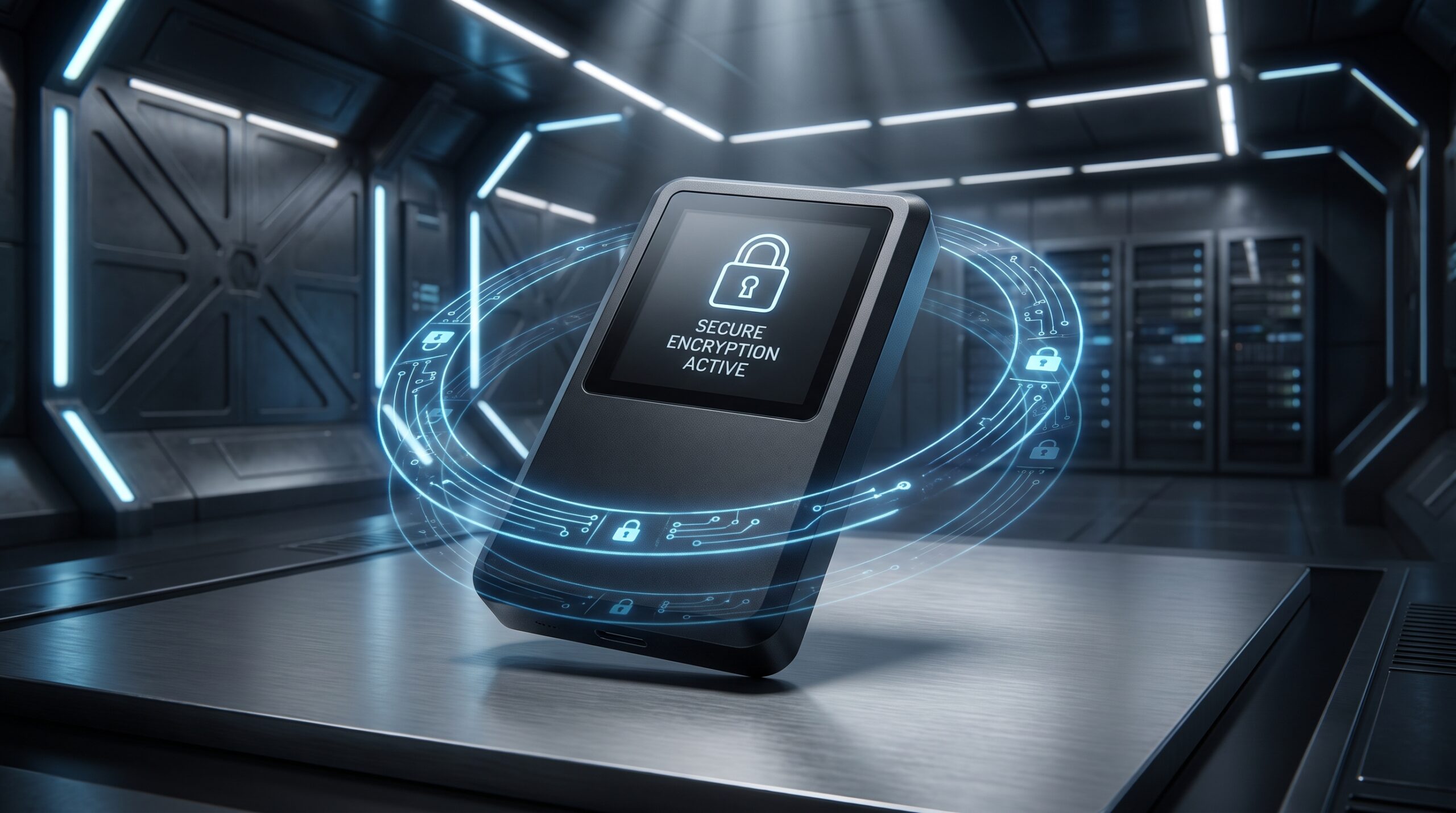
Securing your net worth requires shifting away from convenience and leaning heavily into uncompromised infrastructure. Physical cold storage devices, commonly known as hardware signers, have evolved from clunky USB drives into sleek, hyper-secure cryptographic strongholds. By transitioning your funds to the best crypto hardware wallets, you ensure your private keys never witness an internet connection. Let’s look closely at the premier defenses shielding your generational wealth this year.
The Trust Boundary: Why Hardened Chips Outclass Software Security
To appreciate why dedicated physical hardware is non-negotiable, we must look at the structural vulnerabilities of desktop or mobile applications. When you use a hot wallet, your seed phrase is generated and stored within an environment exposed to your operating system’s memory allocation. If an advanced Trojan bypasses your defensive software, it can quietly scrape that memory, package your private keys, and broadcast them back to a malicious server. A hardware signer completely isolates this cryptographic generation process behind an unbreachable physical wall.
The premier baseline for any elite hardware architecture centers on a specialized microchip known as a Secure Element. These chips, identical to the tamper-resistant silicon embedded within military passports and credit cards, are rated using the Common Criteria framework, typically achieving EAL5+ or EAL6+ certifications. They are specifically engineered to withstand sophisticated laboratory vectors, including side-channel analysis and fault injection attacks. Even if a bad actor physically steals your device, extracting the private keys from a certified Secure Element requires millions of dollars in highly specialized lab equipment.
Expert Insight: Many hobbyists assume that all hardware devices are structurally identical under the hood, but the architectural implementation varies wildly. Some manufacturers utilize a single-chip architecture where the Secure Element directly controls the device’s screen and user input layout. This prevents a secondary, uncertified microcontroller from manipulating what you visually verify on the screen during a transaction, eliminating a primary attack vector known as “blind signing.”
Evaluating the Heavyweights: Ledger vs. Trezor in 2026
When choosing a physical shield for your digital assets, the decision frequently narrows down to the two absolute titans of the hardware ecosystem. Ledger and Trezor continue to dominate the security landscape, yet they approach user protection from deeply contrasting structural philosophies. Understanding these core design differences is essential for deciding which device fits your specific storage requirements.
Ledger has leaned heavily into large-screen, premium ergonomics with its modern lineup, featuring devices like the Ledger Nano Gen5 and the Ledger Flex. These models integrate ultra-clear E Ink touchscreens driven directly by their EAL6+ certified secure processor, allowing for seamless, accurate transaction clear-signing. The proprietary operating system isolates applications from one another, meaning an exploit in a specialized altcoin app cannot compromise your foundational Bitcoin or Ethereum keys.
Trezor, conversely, builds its entire ecosystem on the absolute golden rule of open-source transparency. Flagship models such as the Trezor Safe 5 and the premium Trezor Safe 7 utilize fully auditable firmware that independent global security researchers can continuously stress-test on platforms like GitHub. The Safe series introduces enhanced physical defense through an upgraded Secure Element while maintaining a clean, open ecosystem.
Personal Example: Think of a hypothetical investor named Michael, who manages a highly diversified Web3 portfolio. Michael utilizes a Ledger Flex as his primary interface for signing complex smart contracts and reviewing multi-chain assets via Bluetooth because its isolated application framework minimizes cross-chain attack surfaces. For his foundational, untouchable savings, however, he keeps an open-source Trezor Safe 7 locked away in a secure physical deposit box, guaranteeing absolute transparency for his long-term wealth.
Specialized Security: Air-Gapped Fortresses and Seedless Alternatives
For individuals demanding maximum isolation from any physical connection, the industry has birthed an elite tier of air-gapped hardware wallets. These devices completely eliminate traditional physical inputs like USB ports, Bluetooth antennas, or NFC receivers from their operational design. Instead, they interact with your desktop or smartphone software exclusively through visual data transmission using structured QR codes.
The Keystone 3 Pro and the ultra-premium NGRAVE Zero represent the peak of this true offline signing methodology. The NGRAVE Zero boasts a military-grade EAL7 certified secure chip and operates within a completely sealed physical shell. To sign a transaction, the companion app displays a data payload as a QR code, which you scan using the wallet’s built-in camera. The device processes the signature completely offline and spits out a confirmation QR code for your phone to broadcast, ensuring zero electrical or wireless contact with the outside world.
The Seedless Revolution
Concurrently, innovative card-based platforms like the Tangem Wallet are completely redefining user accessibility by eliminating the traditional 12-to-24-word paper seed phrase entirely. Tangem utilizes a set of three industrial-grade NFC smart cards that generate your private keys directly inside their secure silicon during setup.
The cards cryptographically back up one another directly over an encrypted NFC link. If you lose your primary card, you simply use your secondary or tertiary backup card to regain immediate access to your funds, removing the risk of a paper backup being found or destroyed by fire.
The Recovery Dilemma: Shamir Backups and Encrypted Hardware Keys
The absolute hardest truth of self-custody is that you are your own bank, meaning your ultimate vulnerability isn’t a brilliant remote hacker—it is your own human forgetfulness. Writing your 24 words on a flimsy piece of cardboard and hiding it under a mattress exposes you to house fires, water damage, and accidental disposal. If your recovery phrase is compromised, your hardware device cannot save you; the assets will disappear instantly from the blockchain.
To combat this critical single point of failure, modern platforms have implemented multi-share cryptographic backup standards. Trezor has popularized Shamir’s Secret Sharing (BIP-39/BIP-85 variations) within its premium devices, allowing you to split your recovery seed into multiple unique shares. For instance, you can generate a 3-of-5 setup where you distribute five unique phrase lists across various secure locations. You only need any three of those shares to completely rebuild your wallet, ensuring that a single lost list or a localized break-in does not result in total financial ruin.
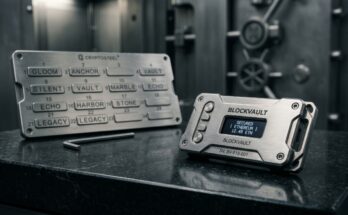
Expert Insight: If you prefer traditional single-seed setups, you must migrate away from paper entirely. Invest in a heavy-duty, marine-grade stainless steel or titanium seed storage plate capable of surviving temperatures exceeding 2500 degrees Fahrenheit. Meticulously stamping your recovery entropy into solid steel ensures that your cold storage strategy remains completely intact, even if the physical structure housing it suffers a catastrophic disaster.
Taking Complete Command of Your Digital Future

Transitioning your assets into deep cold storage is the definitive turning point in an investor’s security journey. Relying on software apps or leaving your tokens on centralized venues is an unacceptable gamble with your financial freedom. By selecting the best crypto hardware wallets that align with your transactional frequency and technical comfort, you build an unyielding barrier against malicious actors.
Do not wait for a security breach to force your hand. Evaluate your current risk exposure, choose between an air-gapped fortress or a touchscreen power-user device, and execute your migration into true self-custody today. Your peace of mind is worth far more than the price of a premium device.
FAQ
Can a hardware wallet be hacked if someone physically steals it?
It is extremely unlikely if the device utilizes a high-grade Secure Element chip (EAL5+ or higher). The chip automatically enforces PIN rate-limiting, and after a few incorrect attempts, it will completely wipe its internal cryptographic memory to prevent brute-force hardware extraction.
What happens if the manufacturer of my hardware wallet goes out of business?
Your funds remain entirely safe. Hardware wallets generate recovery seed phrases using open, industry-wide cryptographic standards like BIP-39, meaning you can easily import your words into any compatible software or competing hardware wallet to recover your assets.
Is it safe to buy a used hardware wallet on secondary marketplaces to save money?
Absolutely not. Never buy a hardware wallet from third-party sites or unverified sellers, as malicious actors can pre-configure the recovery phrases or alter the internal circuitry. Always buy directly from the manufacturer’s official website to guarantee supply chain integrity.
Do I need to buy a separate hardware wallet for every different cryptocurrency I own?
No. Leading modern hardware signers feature robust multi-chain compatibility, allowing you to manage thousands of distinct tokens, stablecoins, Layer-2 networks, and NFTs simultaneously within a single physical unit.