
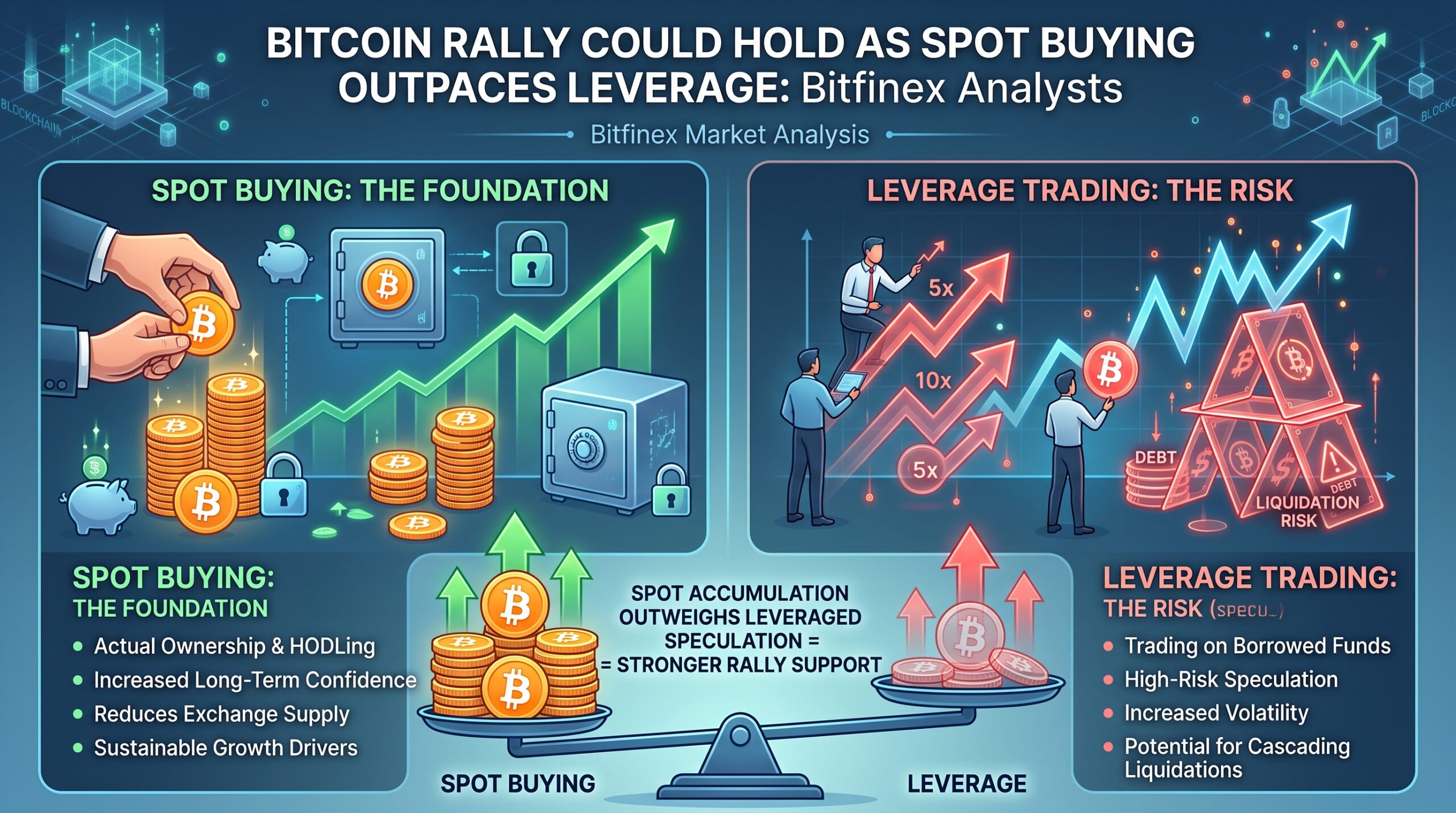
You have seen plenty of Bitcoin rallies that looked strong until the leverage unwound. Price spikes, open interest surges in lockstep, and then a cascade of liquidations erases the gains. Bitfinex analysts argue the latest advance looks different.
Bitcoin climbed roughly 23% in a week, pushing toward the high $70,000s. During the sharpest phase of the breakout, price rose 10–11% while open interest increased only about 4%. That gap tells a clear story: spot buying and short covering did most of the work. Fresh leverage played a smaller role. When real demand leads, the rally often has a longer runway.
Why the Spot-to-Leverage Gap Matters
Rallies built primarily on new leveraged longs leave the market vulnerable. Open interest climbs with price, creating a crowded long side that can unwind violently on any pullback. Liquidation cascades then amplify the decline.
The recent move showed the opposite pattern. Limited growth in open interest relative to the price advance points to cash buyers and the covering of existing shorts. Spot purchases remove coins from the available float without creating the same futures-driven feedback loop. Short covering provides an initial burst, but sustained spot demand can keep pressure on the offer side afterward.
I have watched both types of rallies for years. The leverage-heavy ones feel exciting and then fragile. The spot-led ones tend to digest gains more orderly and recover faster from shallow pullbacks.
ETF Inflows Reinforce the Spot Narrative
U.S. spot Bitcoin ETFs added meaningful capital during the advance. One session alone saw roughly $606 million in net inflows, the strongest day since early May, with BlackRock’s IBIT accounting for the large majority. Earlier sessions in the breakout also recorded solid positive flows.
ETF buying is pure spot demand. Shares are created against actual Bitcoin held by the custodians. When those inflows persist, they provide a structural bid that does not depend on futures positioning or funding rates. Bitfinex noted that continued inflows over subsequent days would further strengthen the demand picture.
Key Support and the Profit-Taking Risk

Analysts flagged the $68,000–$69,000 zone as important. That band represents the approximate cost basis for many buyers over the prior five months. As long as price holds above it, those holders remain in unrealized profit and face less pressure to sell into strength.
The main near-term risk is exactly that cohort taking profits. When a large group of recent buyers moves into the green at the same time, exchange inflows can rise and create overhead supply. Bitfinex highlighted this profit-taking potential as the biggest immediate threat to the rally’s momentum. A controlled consolidation above the cost-basis zone would be healthier than a swift rejection back below it.
What Would Change the Constructive Read
Two developments would weaken the current interpretation. A sharp rise in open interest without matching price progress would signal that leverage is catching up and overcrowding the long side again. Persistent ETF outflows or a clear break below the $68,000–$69,000 support would suggest the spot bid is fading.
Conversely, steady or rising ETF inflows, restrained open-interest growth, and successful defenses of the recent buyer cost basis would keep the spot-led thesis intact. In that environment, pullbacks are more likely to remain shallow and short-lived.
FAQ
How do analysts know spot buying is leading?
Price advanced significantly faster than open interest. That divergence typically indicates cash demand and short covering rather than aggressive new leveraged positioning.
Why are ETF inflows important here?
They represent direct spot demand that removes Bitcoin from the market and does not create futures liquidation risk.
What is the key support level Bitfinex highlighted?
The $68,000–$69,000 zone, roughly the cost basis for buyers over the past five months.
What is the biggest risk to the rally?
Profit-taking from the large group of holders now sitting on unrealized gains, which could increase exchange supply.
Does limited leverage guarantee the rally continues?
No. It reduces one major source of fragility, but macro conditions, ETF flows, and broader risk sentiment still matter.
How should traders monitor the structure going forward?
Watch the pace of open-interest changes relative to price, daily ETF flow numbers, and whether price holds above the recent buyer cost-basis zone.
Leave a Reply